The problem:
Space radiation is a real operational risk

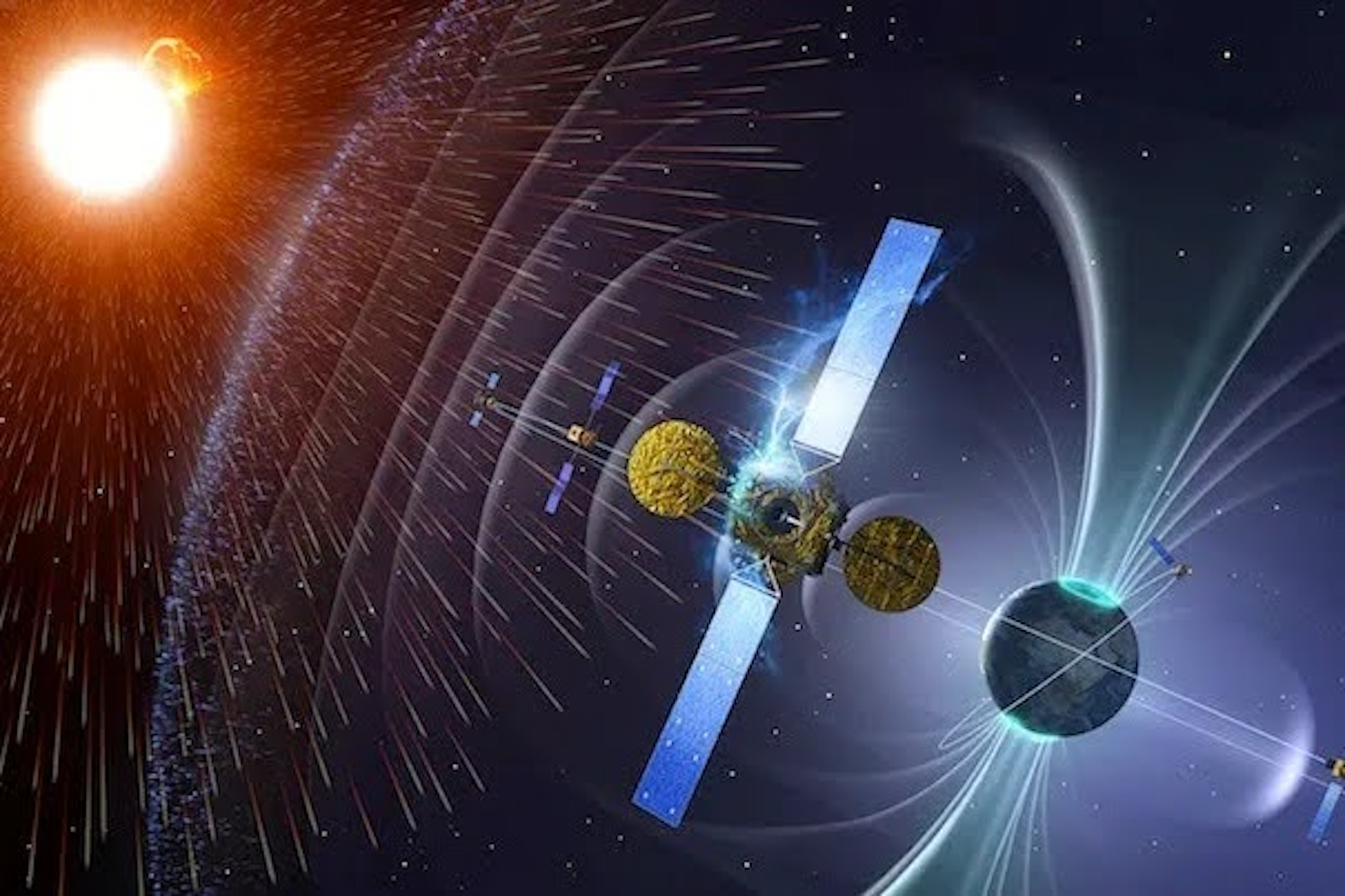
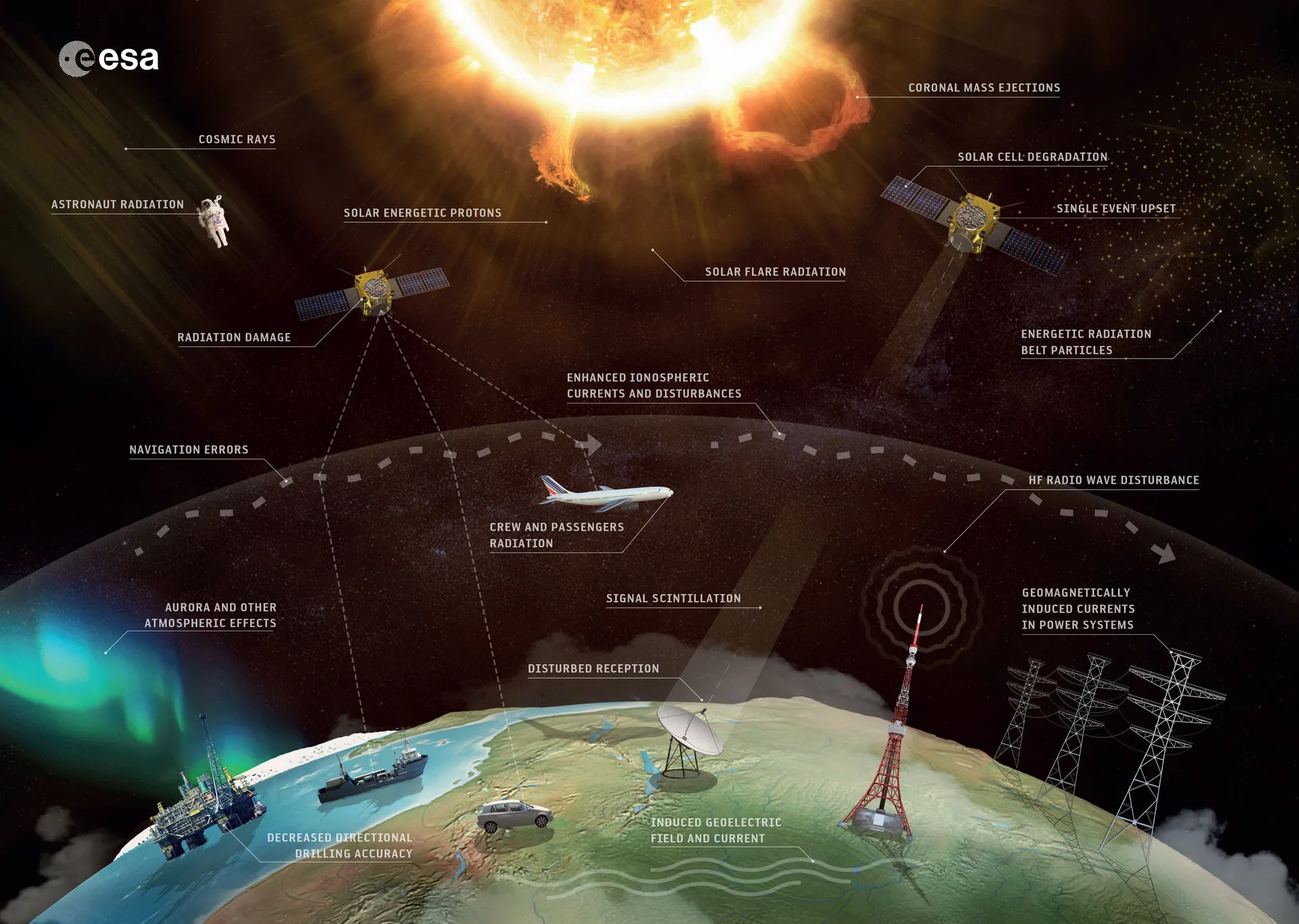
Modern society increasingly depends on space infrastructure. Navigation, communications, weather forecasting, energy distribution, aviation, logistics, and defense all rely on satellites operating in harsh radiation environments. Yet one of the most critical threats to these systems remains difficult to observe and quantify in situ: Space radiation and space weather.

Solar storms and cosmic particles can degrade electronics, shorten spacecraft lifetime, and disrupt all kinds of signals. In extreme cases, it can trigger cascading failures in ground-based infrastructure. The growing number of satellites in orbit, combined with emerging regulatory pressure around sustainability, maneuverability, and debris mitigation, makes radiation resilience a central issue for today's space operations.
Despite major institutional investments, truly robust commercial systems for local in situ radiation monitoring with respect to the actual composition of the radiation remain rare.
AdvaSpace’s mission is to close this gap.
Why existing approaches are not enough
Most existing solutions rely on indirect measurements, large-scale models, or historical averages. While valuable, these approaches often lack the spatial and temporal precision needed for operational decision-making. What is missing is local, in-situ data that reflects the actual radiation environment at a specific place and time — where systems are truly exposed.
Our approach:
Measure reality, not assumptions
AdvaSpace solutions are built on precise in-situ measurement of space radiation. Instead of estimating effects after they occur, we measure the radiation environment directly and translate these measurements into actionable information. By combining proven radiation detection technology with data processing and interpretation, we help organizations understand what is happening, what it means, and how to respond.
Solutions for Space
Weather Monitoring
Detect the particle field → Decode its structure → Get operational value
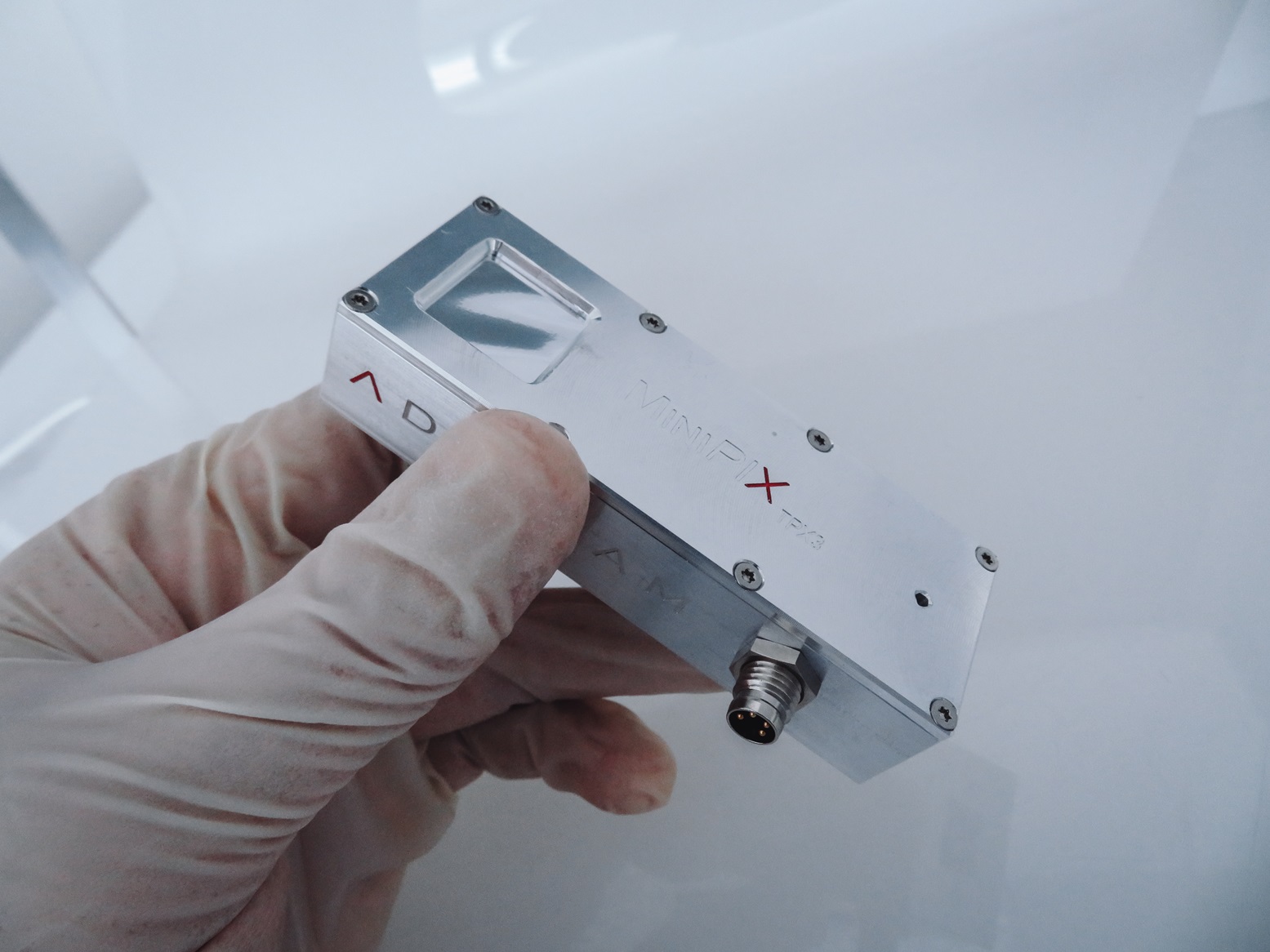
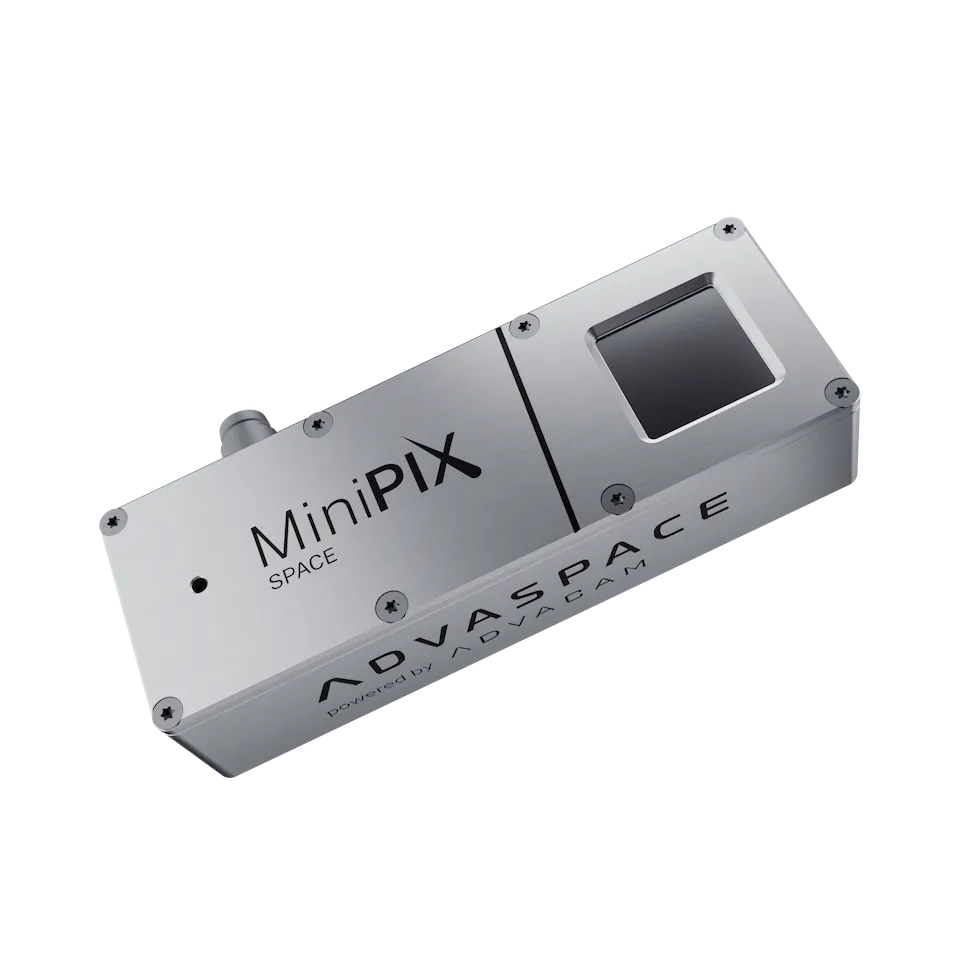
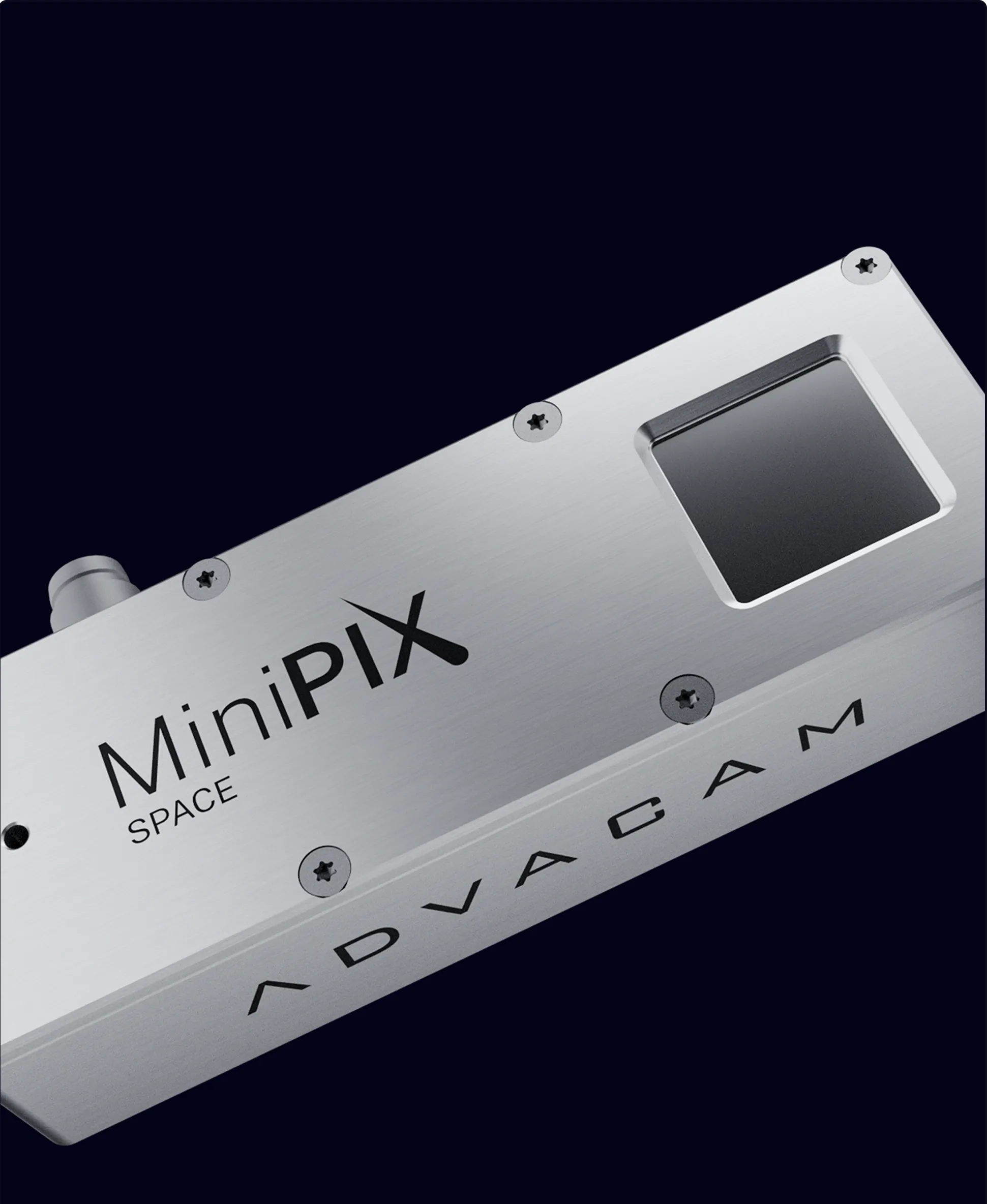
Close-up of a silver metallic device labeled MiniPIX SPACE with ADVACAM branding, featuring screws and a small square sensor or window.

1/ Measure:

MiniPIX SPACE Detector
Measure every single particle in an unlimited field of view. Get a compact, low-powered, space-ready radiation camera. It's vacuum-ready, robust, temperature-stabilized, and proven in space conditions.
Miniaturized low-powered payload
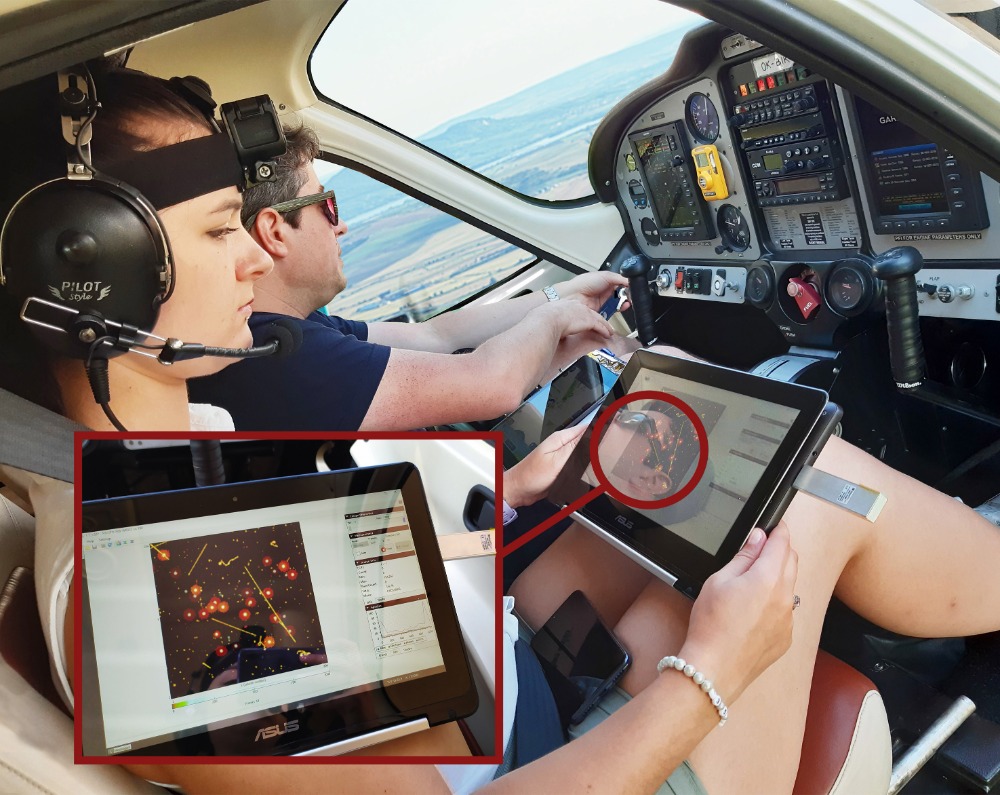
In situ radiation monitoring
Particle-by-particle decomposition
Straightforward integration
Close-up black and white photo of large satellite dishes against a dark sky.

2/ Understand:

Data post-processing services
Understand data by decomposing mixed-radiation fields into particle-type components such as protons, ions, electrons, and photons. Get dose rate, flux, and detailed data on deposited energy and LET spectra.
Advanced radiation data post-processing
Dose, flux, LET, 3D insights
AI-powered particle decomposition
Precise particle-level radiation analysis

3/ Benefit:

Save resources
Avoid radiation-related incidents, extend your operational lifetime, and predict malfunctions or communication losses. Gain valuable insights to enhance safety and achieve your scientific goals.

Applications

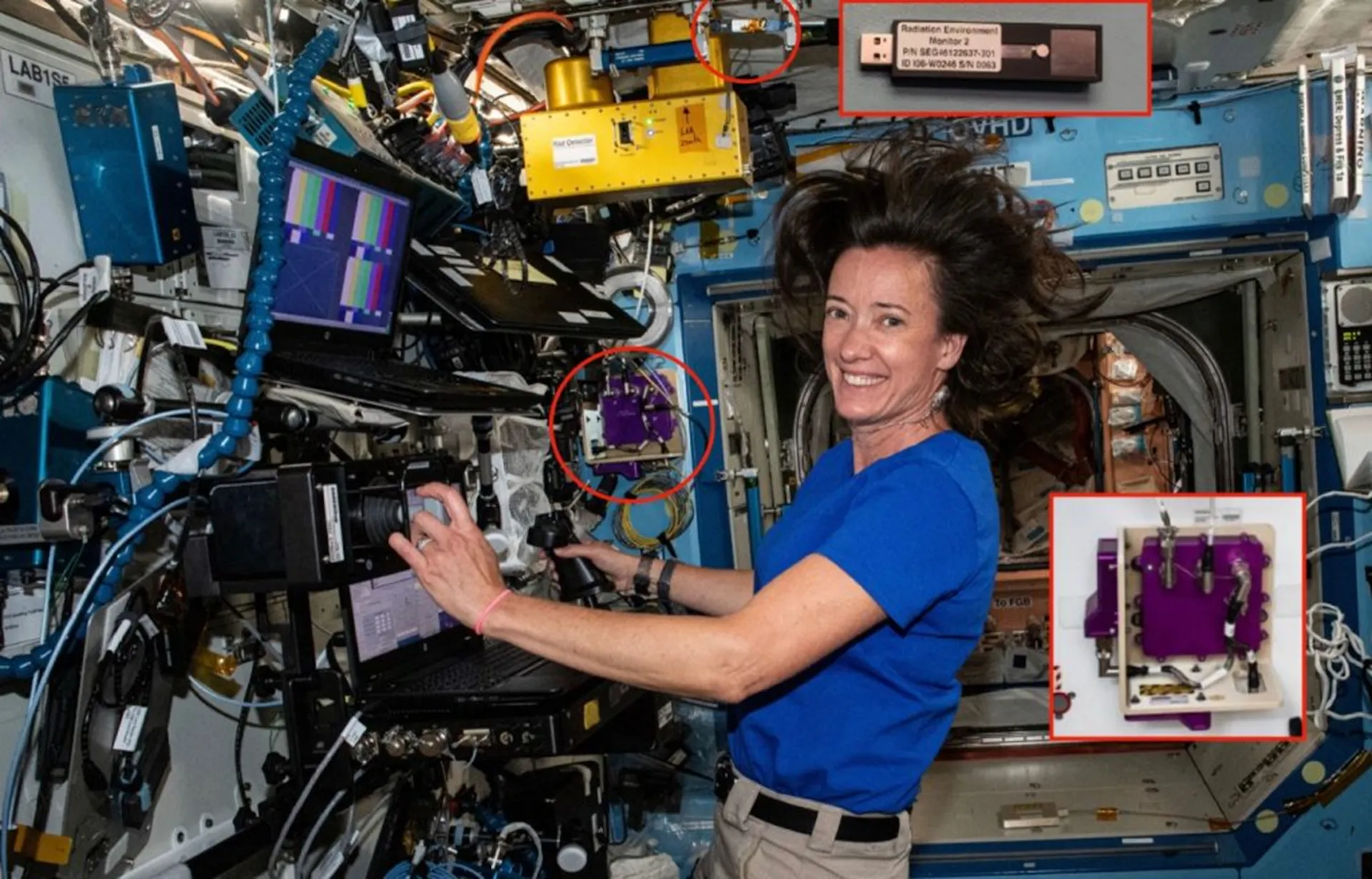
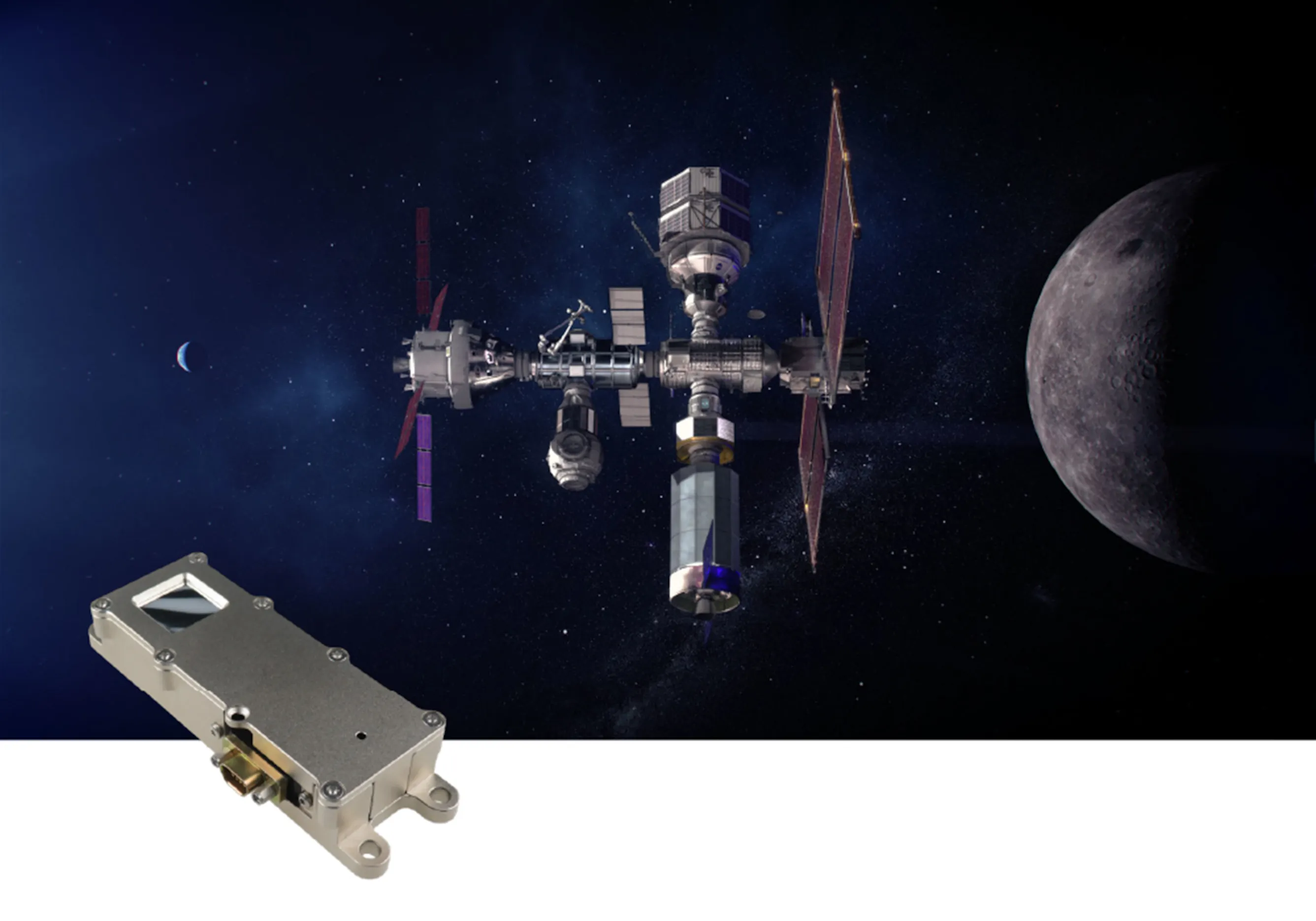
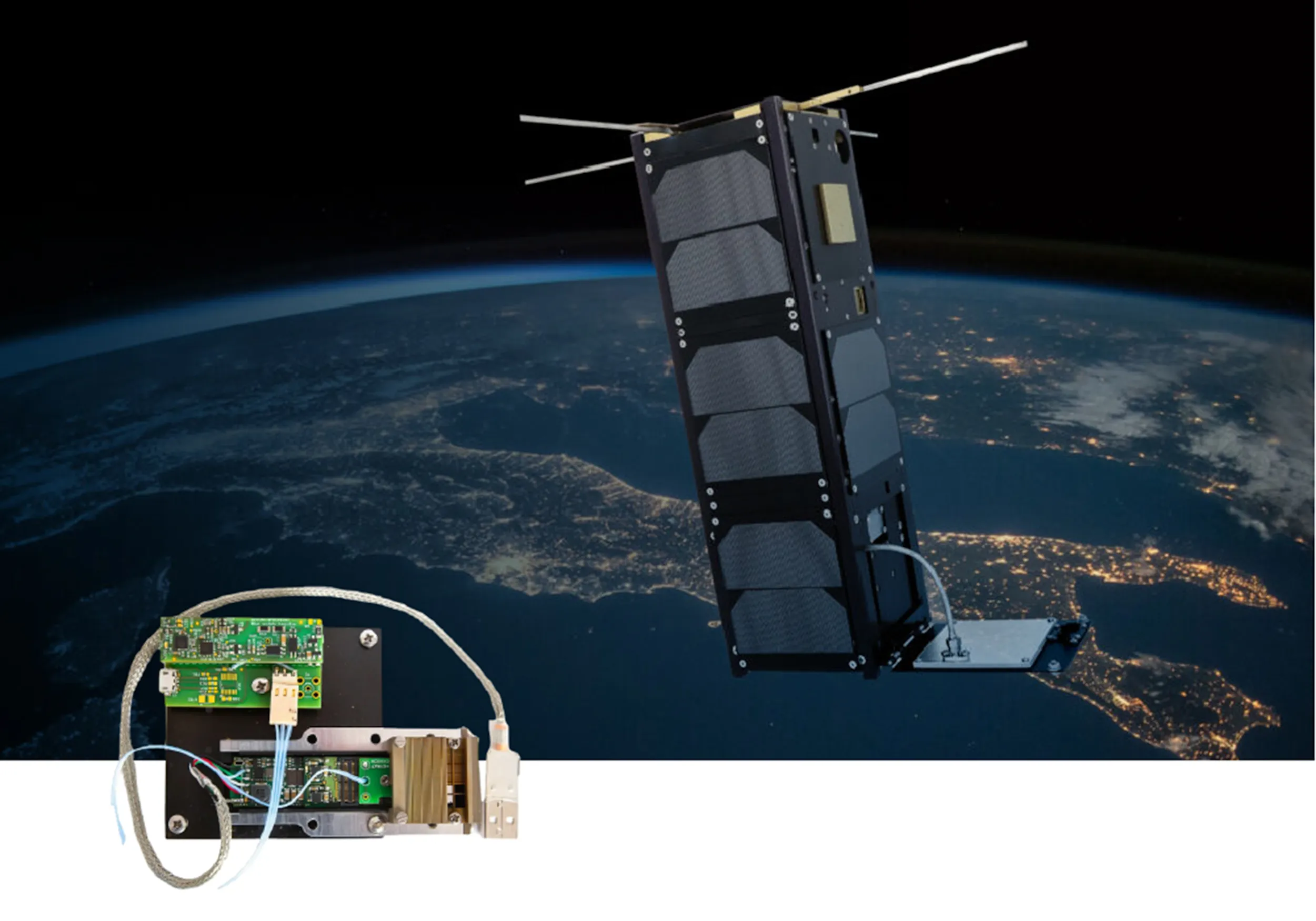
The following list summarizes selected space missions and applications realized using Timepix-based radiation detectors developed by ADVACAM. These flight-proven technologies and heritage missions now form the technological foundation that AdvaSpace further utilizes, adapts, and develops for its own space radiation monitoring products, satellite components, and downstream space-weather services.
All cases