Space Weather Intelligence
End-to-end radiation data services powered by our patented TraX Engine processing tools
Details
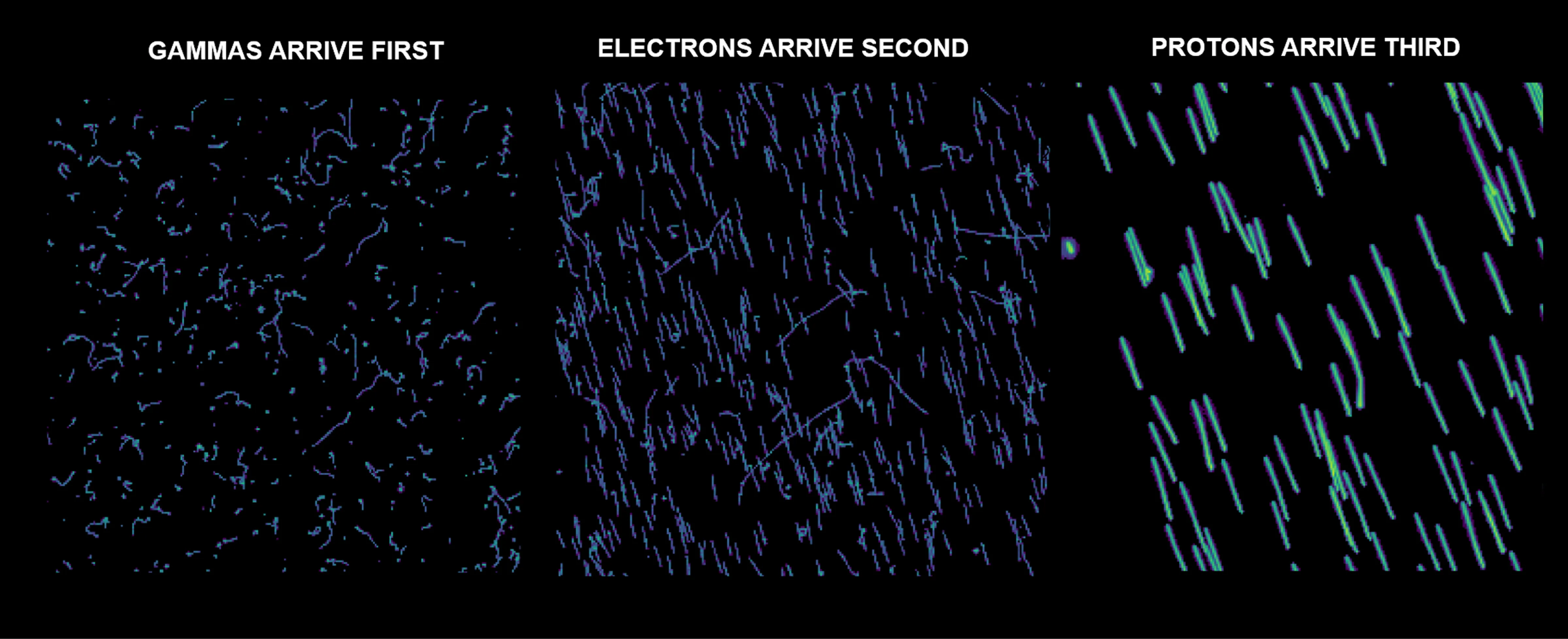
Our TraX Engine tool can break down mixed radiation fields by particle type. These include protons, ions, electrons, photons, and neutrons. Our patented solutions supports real-time calculations of dose, dose rate, and flux. The platform provides details on deposited energy and LET spectra, while 3D directional analysis helps trace the origins of radiation.
By analyzing particle arrival times during solar events, the solution could, in principle, distinguish early-arriving photons and electrons from slower, more hazardous ions. This may open the path to radiation-risk warnings tens of minutes in advance.
.webp)
.webp)
.webp)

The Space Weather Intelligence service is currently delivered as a mission-specific data analysis and reporting service, built on top of our proprietary TraX Engine.
Each project is defined in advance based on the customer’s objectives. AdvaSpace then processes the measured data and prepares custom outputs and reports tailored to the specific mission or application.
This is a typical workflow:
- Data is collected using a Timepix-based detector (e.g. MiniPIX SPACE)
- The customer provides the data to AdvaSpace
- The required outputs and analysis scope are agreed in advance
- AdvaSpace processes the data using TraX Engine
- The results are interpreted and delivered as:
- structured data exports
- visual outputs
- or expert reports with conclusions
Customization is a key part of the service. Before processing begins, we define together:
- which physical quantities are required (e.g. flux, dose, LET, particle types)
- the level of detail and analysis depth
- the format of outputs (data files, plots, reports)
- the specific mission or application context
The service provides interpreted radiation data, not just raw measurements.
Typical outputs include:
- particle-resolved radiation data (photons, electrons, protons, ions)
- particle flux and dose rate over time
- LET-related distributions and energy spectra
- identification of specific radiation signatures or patterns
- mission-oriented interpretation of the radiation environment
Outputs are typically delivered as:
- data exports (structured files for further use)
- plots and visualizations
- expert reports summarizing key findings and implications
In the current service model, TraX Engine is used internally by AdvaSpace as part of the data analysis workflow.
Customers receive processed outputs and reports rather than operating the software directly.
Access to local deployments can be discussed in specific cases, depending on project scope and requirements.
Yes. AdvaSpace can provide demonstrations based on real Timepix measurement data.
During the demonstration, we walk through:
- how the data is processed using TraX Engine
- how different particle types and radiation characteristics are identified
- what kind of outputs can be generated
- how the results are interpreted for specific applications
Demonstrations can be adapted to your area of interest, such as space applications, radiation analysis, or research use cases.
Complete data processing services customizable according to customer needs

A decade of research behind every result

All-in-one solution

From mixed radiation to actionable insight
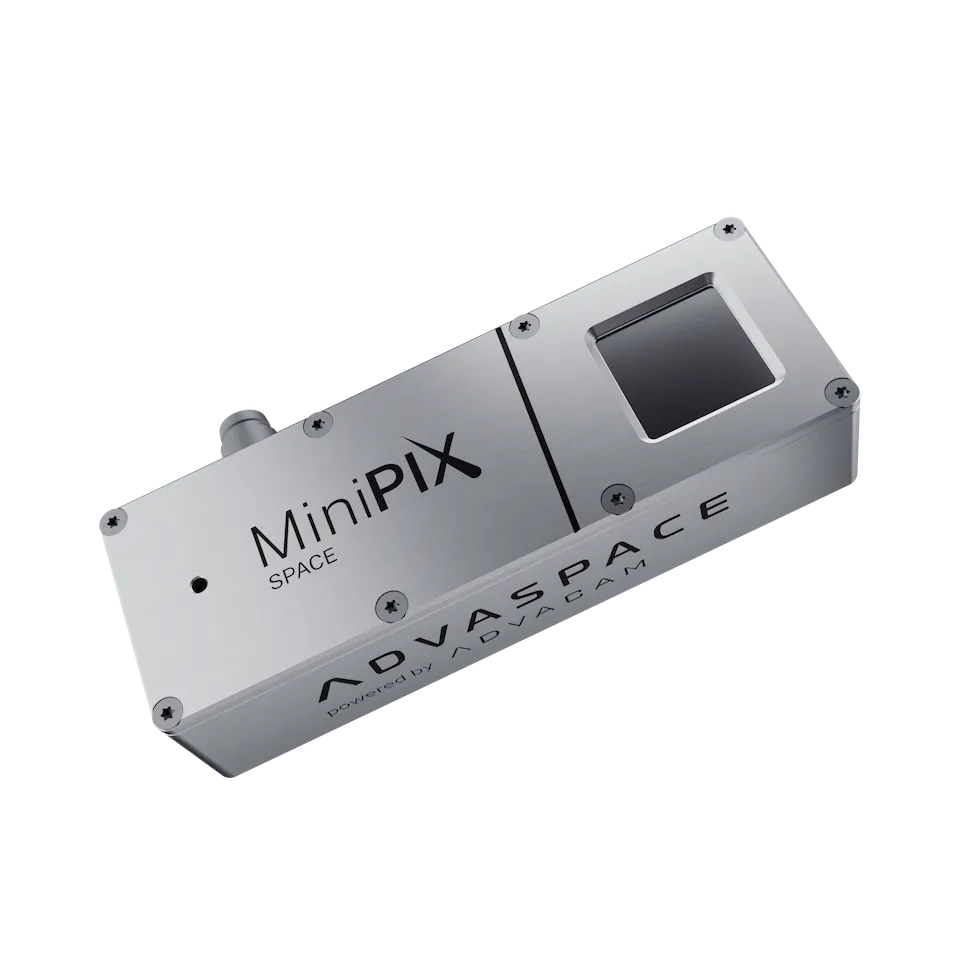
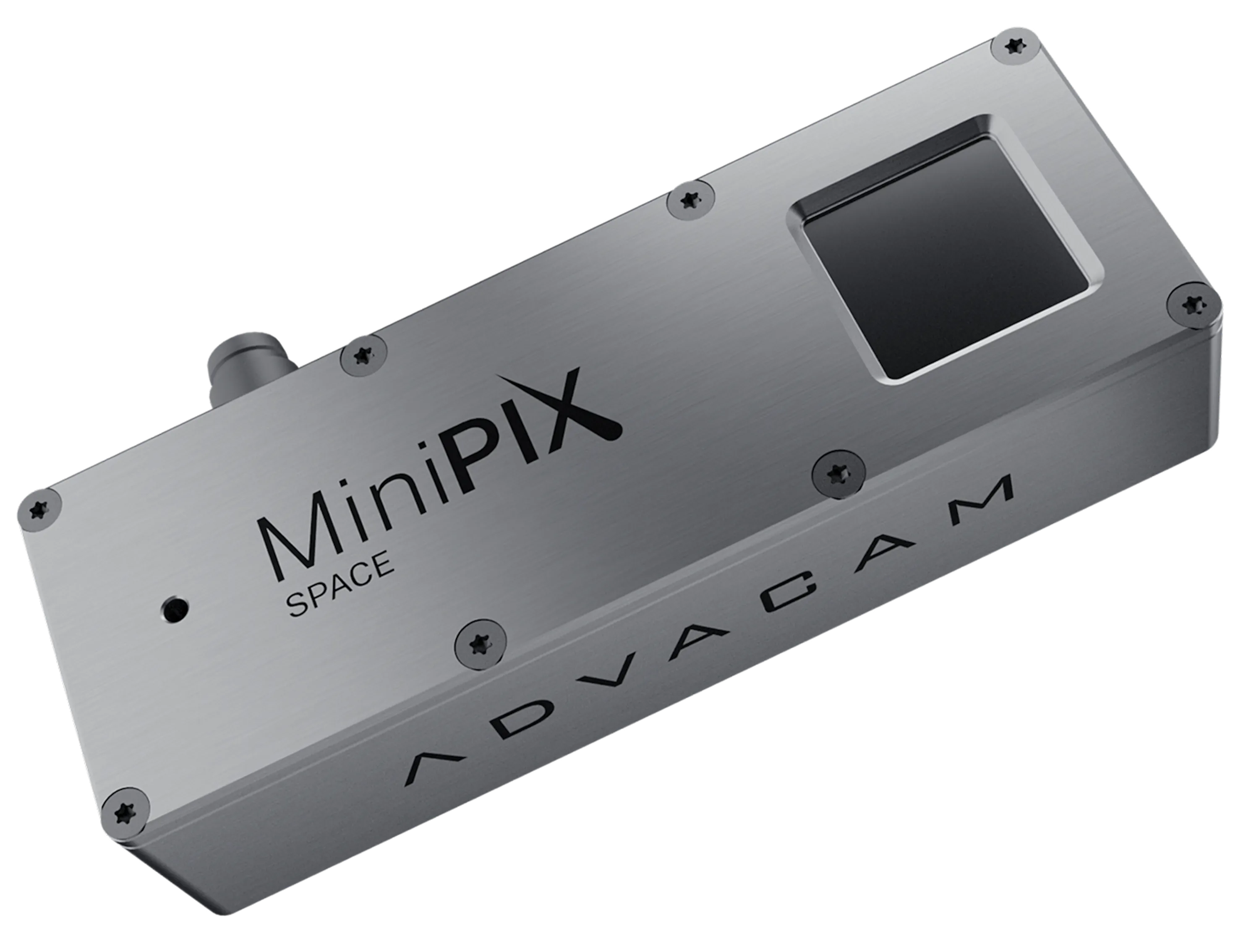
MiniPIX SPACE Detector
TraX Engine: advanced processing of radiation data acquired by Timepix detectors in space, medical, educational and imaging applications
Data Processing Engine (DPE): data analysis tool for particle tracking and mixed radiation field characterization with pixel detectors Timepix

4 steps to Space Weather Forecasting:
High-energy particles can penetrate a spacecraft, posing a significant risk to both the crew and the equipment. The ability of our detectors to monitor the total dose is therefore crucial, for example, for planning mission durations or satellite lifespans.
Our detectors can also determine the direction of incoming radiation, its energy, and particle type. These unique features allow for timely adaptation to incoming threats. The idea is to activate protective systems like shielding or “safe mode” only when detectors see truly dangerous radiation. Just as people take an umbrella when they see dark clouds.
By identifying particle types, our cameras support cosmic weather prediction. Lighter particles arrive from the Sun to Earth several minutes earlier than the heavier, more energetic, and harmful ones. This creates a valuable window for activating protective measures. Alert against truly dangerous particles can come with a thirty-minute lead.
In the last decade, large satellite constellations have emerged. Equipping them with our detector could create a warning system. Satellites detecting dangerous activity could alert others, ensuring timely preparation against potential threats when entering radiation-exposed areas.